A sailing catamaran is the perfect medium for relaxing on the waters on an excursion with friends and family or pursuing an extended transatlantic adventure. It primarily uses wind power to propel the vessel through the water. Today, we talk about the intricacies of a sailing catamaran and its many distinct parts.
Parts of a Sailing Catamaran
1. The Hulls in Numbers
Displacement hulls, or round bottom hulls, are designed to push water aside when moving forward with minimum propulsion. Unfortunately, these hulls are often limited to slower speeds. A more preferred option is planing hulls with V-shaped or flat bottoms, designed to glide on top of water when powered sufficiently.
What is more to know is that sailing catamarans may differ in terms of hulls also. Monohulls with a single hull typically sport a round bottom. On the other hand, catamarans have two hulls providing increased stability and greater ability of going at higher speeds. A third, lesser popular version is a trimaran with three hulls that cut through the waters without creating too much resistance.
2. Types of Masts
Depending on how large the sailing catamaran is, there may be more than one masts onboard. The always present, mainmast is the tallest mast located in the center of the ship – this may or may not be followed by a foremast (in the front of the mainmast, near the bow of the yacht) and a Mizzen mast (immediately in the back of the mainmast).
Sunreef Yachts is known to deploy a carbon fiber mast onboard as it is estimated to retain its strength for twice as long in comparison to an aluminium mast. Additionally, it offers more stability enabling more power on different points of sailing with lesser pitching and rolling as a result of the lesser resistance experienced to move forward.

3. Anatomy of the Sail
The sail is the driving force of the vessel; however, it is inevitable for results to vary based on wind and weather conditions.
The mainsail, also called the principal sail, has its forward edge attached to the mast but is set on the backside of the mainmast, enabling it to act as the primary source of propelling the vessel windward. Its bottoms are also connected to the boom for ease of movement and operations. On the other hand, the jib sits forward of the mast – it is important to note that when the jib overlaps the mast and mainsail because of its huge size, it is then called a genoa. The genoa may partially or completely cover the mainsail to increase the speed of the sailing catamaran as desired.
Two lesser-known types of sails are spinnaker and Gennaker. A spinnaker is a large, symmetrical sail that does not cover the mast – while it does reach different points of sail, it is not recommended to use a spinnaker in rough conditions. Alternatively, the Gennaker combines the best of a genoa and spinnaker, allowing to be more versatile.
Here is a more detailed overview of parts of the sail:

Luff is the forward edge of a sail – in case of the mainsail, the luff is usually hoisted up and attached to the mast, whereas the luff of the jib is attached the forestage. Likewise, the leech is the sail’s back edge while the foot is it bottom edge. Supporting the foot is the boom, a pole that significantly improves the shape of the sail and improves the control of the angle by keeping the bottom of the sail flatter.
Between the luff and foot lies the tack, which is attached to either the boat or spar. The triangle forming between the foot and leech is called the clew, while the one at the top, between the leech and luff is called the head. Some sails may also include a batten which is a solid rod or slat used to help maintain the desired airfoil shape.
4. A Brief on Rigging
The arrangement of the mast, sails, and rigging (the system of ropes, cables, and chains) is collectively known as the sailing catamaran’s rig which holds the system up. Since the rigging itself has one too many parts (which will require us to call in an engineer), let’s just leave it at: the rigging is what supports and controls the mast, sails, and other related parts of a sailing catamaran.
Sailing Catamaran Safety Essentials
Safety is a top priority when cruising offshore, and modern sailing catamarans are designed with multiple systems to ensure peace of mind at sea. From inherent stability to advanced navigation tools, a well-equipped catamaran offers the confidence needed for long-distance voyages.
a. Stability in Rough Seas
A sailing catamaran offers natural stability thanks to its wide beam and dual-hull design. This minimizes rolling and provides a steadier platform, especially in rough conditions, enhancing both comfort and safety for all onboard.
b. Redundancy Systems
Reliable redundancy is key to safe offshore sailing. Many sailing catamarans, including those from Sunreef, feature twin engines, dual watermakers, and backup power systems to maintain functionality in the event of equipment failure.
c. Emergency Equipment
Every sailing catamaran should be equipped with essential safety gear, including EPIRBs (Emergency Position-Indicating Radio Beacons), liferafts, fire extinguishers, and marine radios. These tools ensure rapid communication and emergency response if needed.
d. Anchoring Systems
A robust anchoring system is crucial for holding position in strong currents or adverse weather. Sunreef catamarans are equipped with reinforced anchoring gear and electric windlasses to offer secure and efficient mooring in a variety of conditions.
All Sunreef sailing catamarans come with advanced safety and navigation systems as standard. From state-of-the-art radar and GPS to thermal imaging and collision avoidance technologies, Sunreef ensures that owners can cruise confidently, no matter the destination.
Sailing Catamarans by Sunreef Yachts
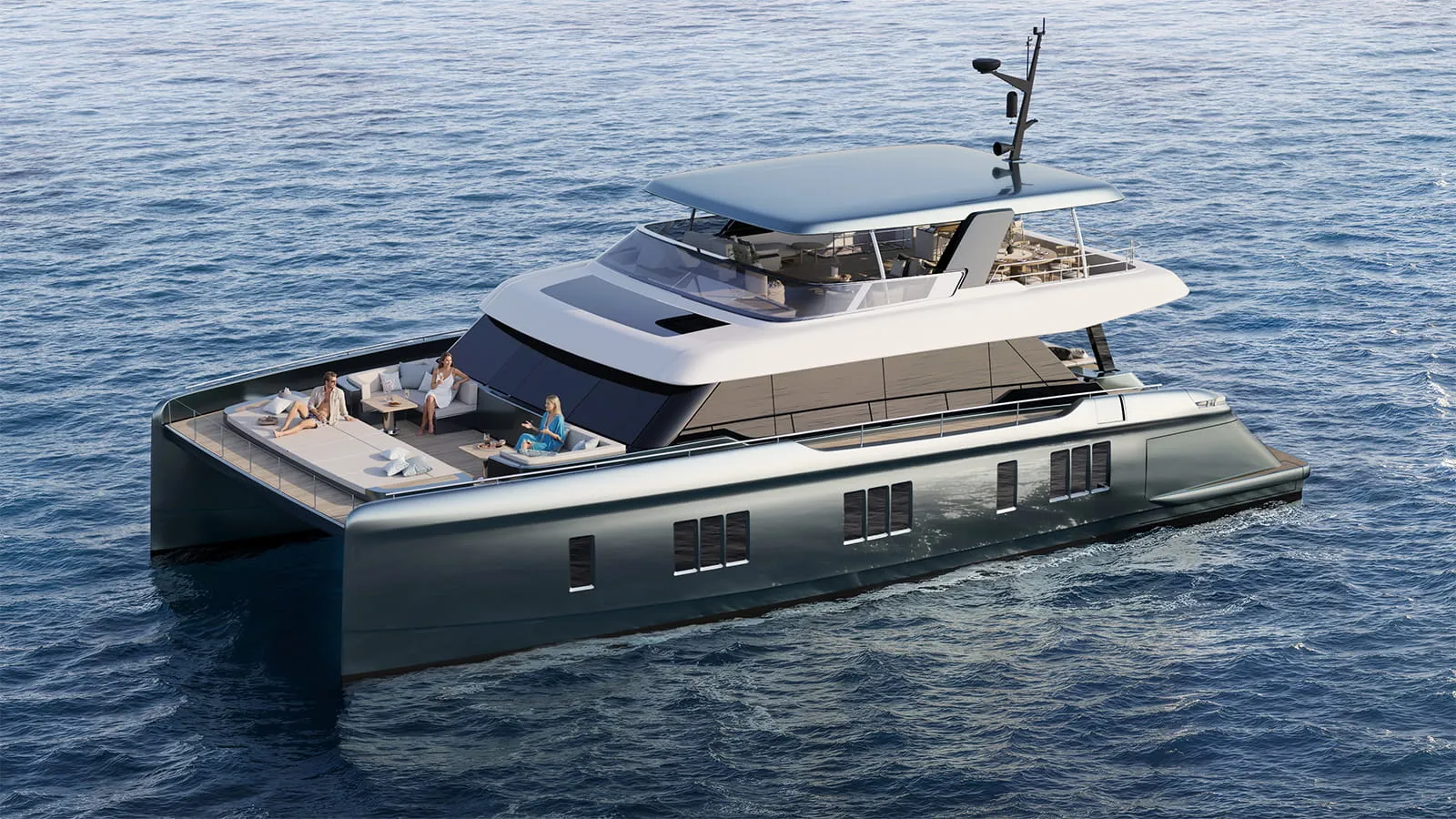
As a multi-award-winning designer and manufacturer of luxury sailing catamarans, Sunreef Yachts has made significant advancements to the usual sailing strategy. Apart from gliding the waters propelled by the natural force of the wind, these sailing catamarans are equipped with twin engines for auxiliary power.
Sunreef Yachts offers a range of luxury sailing catamarans in sizes 50, 60, 70, 80, and 100, available in both classic and eco versions. Among them, the Sunreef 100 Eco was recently honored with the Best Eco Yacht 2024 at the prestigious Best of the Best Awards. The shipyard also builds larger sailing superyachts such as theSunreef 35M and Sunreef 43M; fully bespoke luxury catamarans that can be custom-designed to suit the owner’s lifestyle and preferences.

Eco-Friendly Sailing: The Future of Cruising
As sustainability becomes a central focus in the marine industry, Sunreef Yachts is redefining what it means to sail responsibly. Each Sunreef sailing catamaran is designed to combine the natural power of wind with cutting-edge eco solutions. By integrating silent operation, clean energy, and sustainable craftsmanship, Sunreef delivers a new standard for cleaner, greener cruising.
a. Renewable Energy Sources Onboard
Sunreef’s Eco range of sailing catamaran models features a proprietary solar power system with ultra-light, fully integrated panels that can be installed across the hull, mast, superstructure, and bimini. Combined with advanced battery banks, this technology ensures optimal energy efficiency onboard, powering hotel loads and navigation systems without the noise or pollution of conventional generators.
b. Hybrid Propulsion for Cleaner Voyaging
To complement sail power, every Sunreef Eco sailing catamaran can be equipped with a hybrid propulsion system that combines electric motors with high-performance battery banks. This setup enables smooth, emissions-free cruising during low-wind conditions, precise maneuvering in ports, and energy recovery through hydro-generation while under sail.
c. Sustainable Construction Materials
Sunreef Yachts actively incorporates sustainable materials into the construction of its sailing catamaran fleet. This includes the use of flax fiber composites for structural components, recycled teak for deck surfaces, and bio-based resins throughout the yacht interior. These materials reduce environmental impact while preserving the luxurious finish and durability Sunreef is known for.

Chartering vs. Ownership: What’s Right for You?
If you’re new to the world of sailing catamarans, deciding between chartering and ownership is a crucial first step. Both options offer unique advantages, and the right choice depends on your lifestyle, usage frequency, and long-term goals.
a. Chartering Before Buying
Chartering a sailing catamaran allows you to experience different layouts, equipment options, and sailing conditions without the long-term commitment of ownership. It is an ideal way to understand what matters most to you onboard, whether it’s cabin configuration, sail performance, or flybridge space. Sunreef Yachts offers luxury charter experiences on a range of models, helping you evaluate the brand’s craftsmanship and capabilities firsthand.
b. Cost, Maintenance, and Usage Considerations
Ownership involves a significant investment and ongoing responsibilities such as maintenance, crew, insurance, and mooring fees. However, for frequent cruisers or those who value full personalization, owning a Sunreef sailing catamaran provides unmatched freedom and long-term value. Chartering, on the other hand, is better suited for those who sail seasonally or prefer a hassle-free experience without operational logistics.
c. Sunreef’s Charter and Pre-Owned Programs
Whether you’re exploring the seas temporarily or envisioning your own fully customized catamaran, Sunreef provides the ideal path to discovering the luxury of life under sail.
To support both newcomers and experienced yachtsmen, Sunreef Yachts offers a curated charter fleet and a dedicated portfolio of pre-owned sailing catamaran models. The charter program showcases the latest innovations in design and sustainability, while the pre-owned fleet gives buyers access to Sunreef-validated vessels with proven performance and immediate availability.

Frequently Asked Questions
1. What is a sailing catamaran?
A sailing catamaran is a leisure vessel that uses the attached sails as its primary means of propulsion. While sailing catamarans may vary in size and complexity, the basic components remain similar – for starters, each sailing catamaran has a hull or more to carry the passengers and support the rigging (which consists of the mast, sail, and halyards/chains).
2. How much does a sailing catamarans cost?
The multi-award-winning sailing catamarans from Sunreef Yachts are available in sizes 50, 60, 70, 80, and 100; to know more about the prices of each of these models reach out to our representatives. Over the years, luxury sailing catamarans have offered lucrative returns on investment when maintained well overtime.
3. Do sailing catamarans have engines?
Sunreef Yachts combines motors with sails to offer more functionality onboard each sailing catamaran. This makes the sailing concept more practical when dealing with sailing gear related issues, little to no winds, and when manoeuvring tighter spaces.
4. Is it better to buy or charter a sailing catamaran first?
For most newcomers, chartering a sailing catamaran before buying is a smart first step. It allows you to explore different layouts, test sailing conditions, and experience life at sea without the long-term commitment or maintenance responsibilities of ownership. Chartering helps identify what features matter most to you, such as cabin configuration, deck space, or sail performance. Sunreef Yachts offers a premium charter fleet that lets future owners’ trial various models before making a purchase decision.
5. How hard is it to sail a catamaran?
Because of their wide beam and dual-hull configuration, catamarans offer exceptional stability and a smoother sailing experience, making them easier to handle for many sailors. Their spacious layouts also allow for easier movement onboard. Sunreef sailing catamarans are additionally equipped with twin engines, advanced navigation systems and high-performance rigging solutions that simplify manoeuvring and enhance comfort during offshore cruising.
6. Are catamarans safer than a yacht?
Catamarans are widely regarded as highly stable and secure vessels thanks to their twin-hull design, which reduces rolling and creates a steadier platform at sea. Many modern catamarans also feature redundancy systems such as twin engines, backup power solutions and reinforced anchoring systems for additional safety offshore. Sunreef catamarans are designed with advanced safety and navigation technologies, allowing owners to cruise with confidence in a variety of conditions.
7. Are catamarans safer in rough seas?
Modern catamarans are designed to perform confidently in a variety of sea conditions. Their wide stance and buoyant dual hulls minimise rolling and improve comfort in rough waters. Sunreef sailing catamarans combine this natural stability with advanced onboard navigation and safety technologies to deliver a secure and reliable cruising experience during extended offshore passages.
8. Why do people like catamarans?
Catamarans are appreciated for their stability, spaciousness and comfort at sea. Their dual-hull design creates expansive living areas, generous deck spaces and luxurious cabin layouts that are ideal for socialising, dining and extended cruising. Sunreef catamarans elevate this experience further with bespoke interiors, refined craftsmanship and innovative eco-conscious technologies that redefine modern luxury living on the water.