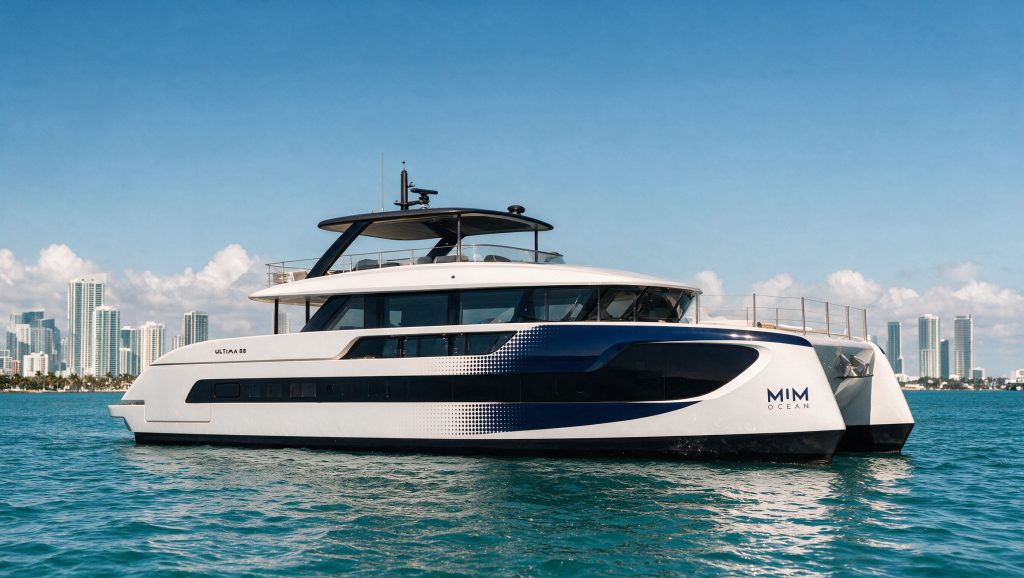
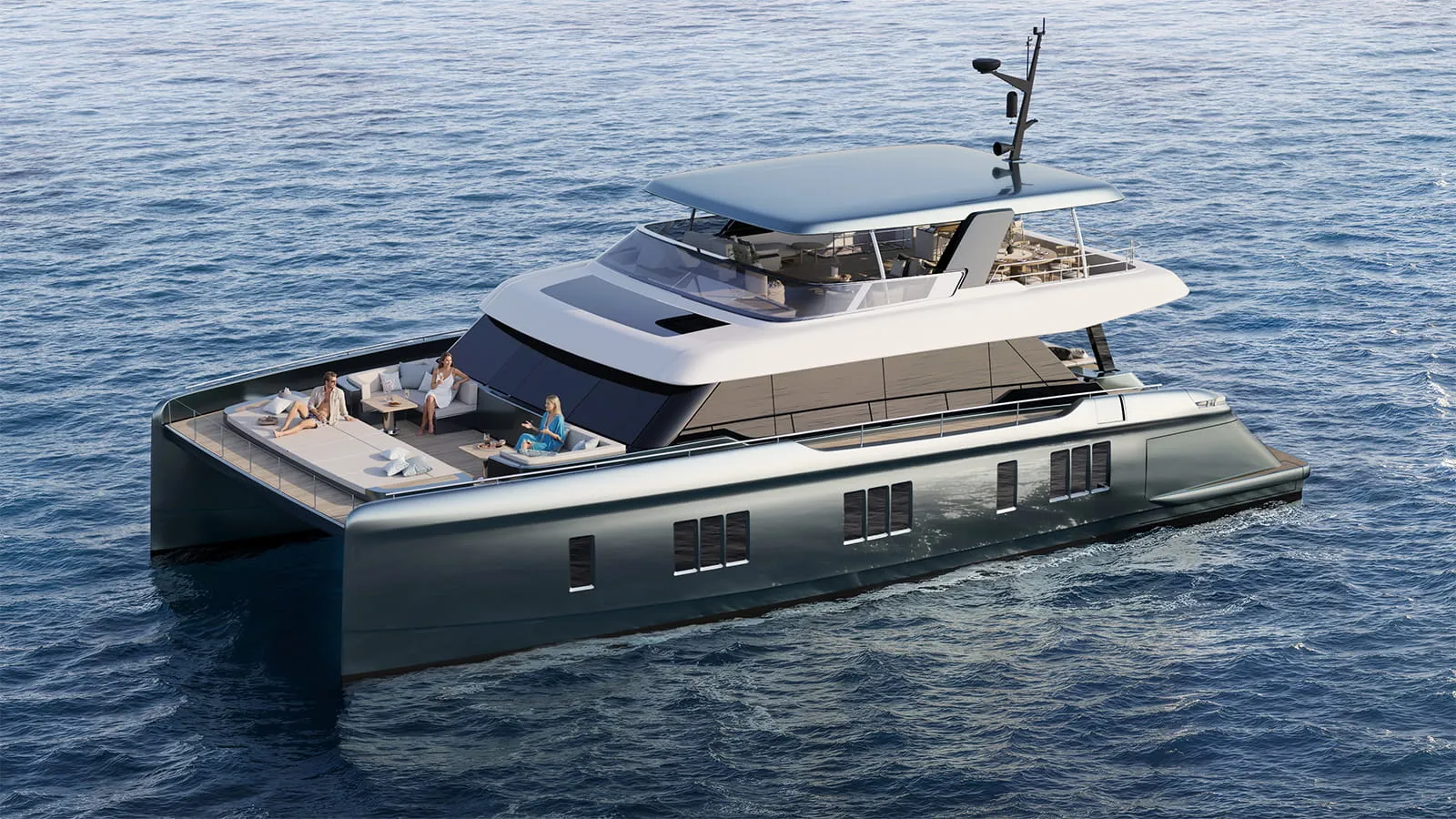
When it comes to life on the water, the choice between a luxury yacht and a catamaran is often framed as a matter of comfort versus performance. In reality, the distinction runs far deeper. From long-term costs and fuel efficiency to space, stability and overall onboard experience, each vessel offers a fundamentally different way of cruising. Understanding these differences is key to making a smarter, more informed decision: one that aligns with how you truly want to experience the sea.
The Consumption Factor: Fuel Efficiency
Catamarans hold a clear advantage over a luxury yacht when it comes to fuel efficiency. Unlike a traditional luxury yacht, which relies on a single, deeper hull that pushes through the water and demands greater engine power, catamarans are designed with twin slender hulls that glide effortlessly across the surface. This hydrodynamic efficiency significantly reduces drag, resulting in lower fuel consumption and long-term cost savings.
In addition, the lightweight structure of a catamaran further enhances performance, allowing it to maintain speed with less energy compared to a luxury yacht. Their shallower draft also offers a distinct advantage, enabling access to secluded bays and shallow anchorages that are often out of reach for a luxury yacht. This not only expands cruising possibilities but also allows for a more immersive and flexible experience at sea.
Ease of Living: Stability and Space
While a luxury yacht is often associated with elegance and prestige, it rarely matches the stability and space offered by a catamaran. A traditional luxury yacht, built on a single hull, is more prone to heeling and rolling, particularly in changing sea conditions. In contrast, a catamaran’s dual-hull design provides a naturally balanced platform, significantly reducing motion and delivering a smoother, more comfortable experience at sea.
This enhanced stability translates directly into better onboard living. Unlike a luxury yacht, where movement can feel restricted due to narrower layouts and constant motion, catamarans offer expansive living areas with effortless flow between spaces. Wide beams allow for open-plan interiors, generous saloons, and seamless indoor-outdoor living.
The result is an environment that feels more like a floating residence than a vessel. Spacious decks provide the ideal setting for sunbathing, socializing, and alfresco dining, making catamarans far more accommodating for larger groups. For those new to life at sea, this combination of space and stability makes a catamaran a more accessible and enjoyable alternative to a luxury yacht.

The Privacy Advantage: Space Reimagined
While catamarans are ideal for socializing, they also offer a level of privacy that a luxury yacht often struggles to achieve. On a traditional luxury yacht, cabins and living areas are typically arranged within a single hull, which can limit separation between guests and reduce personal space.
In contrast, the dual-hull configuration of a catamaran naturally creates distinct living zones. This separation allows for greater privacy, with cabins positioned further apart and often divided between hulls. The result is a quieter, more exclusive onboard experience where guests can enjoy both connection and solitude.
Compared to the more compact and centralized layouts of a luxury yacht, catamarans provide a more refined balance between shared spaces and private retreats, enhancing overall comfort for extended stays or charter use.
The Investment Perspective: Cost of Ownership
Beyond the initial purchase, the true cost of ownership reveals a clearer distinction between a catamaran and a luxury yacht. A traditional luxury yacht often comes with significantly higher fuel consumption due to its heavier structure and single-hull design, requiring more power to maintain performance. In addition, the complexity of systems onboard a luxury yacht typically leads to increased maintenance demands and the need for a larger, more specialized crew.
Catamarans, on the other hand, offer a far more efficient ownership model. Their lightweight construction and dual-hull efficiency reduce fuel usage, while simplified systems and smarter layouts minimize maintenance requirements. Unlike a luxury yacht, where operational costs can escalate quickly, catamarans provide a more controlled and predictable cost structure.
Over time, this translates into a more balanced and sustainable investment. Lower running costs, reduced fuel dependency, and greater efficiency position catamarans as a smarter long-term alternative to a luxury yacht, both financially and operationally.

The Impact of Time: Depreciation
Like all assets, vessels are subject to depreciation over time, and a luxury yacht is no exception. However, the rate at which value declines can vary significantly depending on design, efficiency, and market demand. A traditional luxury yacht, with higher operating costs and more complex systems, often experiences steeper depreciation due to ongoing expenses and shifting buyer preferences.
Catamarans, by contrast, tend to retain their value more effectively. Their growing global demand, fuel efficiency, and practical layouts make them increasingly attractive in both private ownership and charter markets. Unlike a luxury yacht, which may be viewed as a higher-cost asset to maintain, catamarans offer a more balanced ownership proposition that appeals to a wider range of buyers.
This combination of efficiency, versatility, and market appeal positions catamarans as a stronger long-term investment, offering better resale potential compared to a luxury yacht.
The Reality of Upkeep: Service and Maintenance
Owning a vessel comes with ongoing maintenance requirements, and this is where the difference between a catamaran and a luxury yacht becomes particularly evident. A traditional luxury yacht, with its intricate systems, layered engineering, and complex detailing, often requires specialized servicing and higher upkeep costs. From engine access to onboard systems, maintaining a luxury yacht can be both time-intensive and financially demanding.
Catamarans, by contrast, are designed with efficiency and accessibility in mind. Their dual-hull structure allows for easier access to key systems, while simplified layouts reduce the overall complexity of maintenance. Unlike a luxury yacht, where servicing can quickly escalate in cost, catamarans offer a more practical and manageable approach to upkeep.
Over time, this results in reduced maintenance expenses, fewer technical challenges, and a more streamlined ownership experience, making catamarans a smarter alternative to a luxury yacht.
The Charter Appeal: Versatility and Demand
Catamarans have become highly sought-after in the charter market, often outperforming a luxury yacht due to their superior space, stability, and guest-friendly layouts. While a traditional luxury yacht may offer elegance, it often lacks the expansive living areas and balanced design that guests prioritize.
Catamarans are specifically favored for their ability to comfortably accommodate larger groups, with wide decks, open-plan interiors, and multiple social zones that enhance the onboard experience. Unlike a luxury yacht, where space can feel more confined and movement more restricted, catamarans provide a more relaxed and accessible environment for guests of all ages.
This increased comfort and versatility translates directly into stronger booking demand. As a result, catamarans often achieve higher occupancy rates and more consistent charter income compared to a luxury yacht, making them a more attractive option for owners looking to maximize returns through charter programs.

The Final Verdict
The comparison between luxury yachts and catamarans comes down to more than tradition or perception. It is about efficiency, space, stability, and long-term value; all of which shape the true experience of life at sea. While yachts may carry a legacy of classic luxury, catamarans represent a more intelligent evolution of modern yachting.
At the forefront of this shift are Sunreef Yachts, whose designs elevate the advantages of catamarans to an entirely new level. By combining expansive living spaces with innovative engineering, refined craftsmanship and forward-thinking technology, Sunreef catamarans deliver a seamless balance of comfort, performance and efficiency. From reduced fuel consumption and optimized layouts to enhanced stability and bespoke interiors, every element is designed to maximize both experience and value.
For those seeking a smarter way to explore the sea, the answer is clear. Catamarans are no longer an alternative: they are the benchmark. And with Sunreef, that benchmark is continuously being redefined.
Frequently Asked Questions
1. What is the difference between a luxury yacht and a catamaran?
The key difference lies in their structure and onboard experience. Luxury yachts typically feature a single hull, while catamarans have two hulls. This dual-hull design provides greater stability, more living space, and improved fuel efficiency, making catamarans a more practical and comfortable option for modern cruising.
2. Are catamarans more fuel-efficient than luxury yachts?
Yes, catamarans are generally more fuel-efficient. Their lightweight construction and hydrodynamic design allow them to glide over the water, reducing fuel consumption and lowering operating costs over time compared to traditional yachts.
3. Which is more stable at sea: a yacht or a catamaran?
Catamarans are significantly more stable due to their wide beam and twin-hull structure. Unlike yachts, which can tilt or heel in rough conditions, catamarans provide a smoother and more balanced experience, making them ideal for both experienced sailors and newcomers.
4. Do catamarans offer more space than luxury yachts?
Yes, catamarans typically offer more usable living space. Their wide layout allows for larger decks, open-planned interiors, and better separation of living areas, creating a more comfortable and spacious onboard experience.
5. Are catamarans a good investment compared to luxury yachts?
Catamarans are often considered a stronger long-term investment. They tend to retain their value better, have lower operating costs, and are in high demand in both private ownership and charter markets.
6. Is maintenance costs lower for catamarans?
In most cases, yes. Catamarans generally have simpler systems and more efficient layouts, which can lead to lower maintenance and servicing costs compared to the more complex systems found on luxury yachts.
7. Why are catamarans popular for charter?
Catamarans are highly sought after in the charter market due to their stability, spacious layouts, and ability to accommodate larger groups comfortably. These features make them more appealing to guests, resulting in stronger charter demand.
8. Can catamarans access shallower water than luxury yachts?
Yes, catamarans have a shallower draft, allowing them to anchor closer to shore and access areas that may be restricted to deeper-draft yachts. This adds flexibility and enhances the overall cruising experience.
9. Are catamarans suitable for first-time boat owners?
Yes, catamarans are often more suitable for first-time owners due to their stability, ease of handling, and comfortable living spaces. They provide a more relaxed and user-friendly experience at sea.
10. Why choose Sunreef Yachts catamarans?
Sunreef catamarans combine innovative design, superior craftsmanship, and advanced technology to deliver exceptional comfort, efficiency, and performance. Their bespoke approach and focus on sustainability position them at the forefront of modern yachting.
11. Is a catamaran bigger than a yacht?
Catamarans typically offer significantly more usable living space thanks to their wide beam and dual-hull design. This allows for expansive decks, open-plan interiors and multiple generously sized cabins, all designed for comfort and seamless social living. In comparison, traditional yachts often feel more confined, with space distributed across narrower layouts. For owners who value volume, flow and freedom of movement, catamarans present a far more spacious and versatile onboard experience.
12. Why are catamarans better than yachts?
Catamarans deliver a far superior cruising experience by remaining level on the water, unlike monohull yachts that heel under sail. This stability translates into greater comfort, smoother movement and a more relaxed onboard atmosphere. Reduced rolling and pitching minimise fatigue and seasickness, allowing guests to fully enjoy time at sea. The result is a more refined, effortless way to cruise, especially on longer journeys.
13. Is a catamaran safer than a yacht?
Catamarans are designed with safety at their core, featuring multiple watertight compartments and a highly stable platform that remains level even in demanding conditions. Their inherent balance reduces the risk of sudden movements onboard, enhancing both comfort and security. While monohulls rely on self-righting capabilities, catamarans prioritise prevention through stability, offering a reassuring and controlled experience at sea.
14. Can catamarans handle rough seas?
Yes, catamarans are exceptionally capable in rough seas. Their wide beam and advanced hull design provide outstanding stability, allowing them to maintain a level ride even in challenging conditions. This ensures greater comfort and confidence onboard, with less impact from waves compared to traditional yachts. The experience remains smooth, controlled and far more enjoyable.
15. Why do people like catamarans?
Catamarans are favoured for their comfort, space and effortless lifestyle at sea. Their ability to remain level dramatically reduces motion, making them ideal for those seeking a more relaxed and enjoyable journey. Combined with expansive living areas, seamless indoor-outdoor flow and enhanced stability, they offer a more social, comfortable and modern way to experience life on the water.