As the yachting world turns its focus toward cleaner, quieter, and more efficient cruising, hybrid yachts have emerged as a defining innovation. No longer a niche experiment, they now represent a serious shift in how luxury yachts are designed and operated.
Blending traditional combustion engines with advanced electric propulsion, hybrid yachts strike a balance between performance and environmental responsibility, offering a glimpse into the future of yachting without sacrificing the thrill of the open sea.
The True Catalysts Behind Hybrid Yachts’ Innovation
The raising awareness of securing a more carbon neutral future played its role in the invention of hybrid yachts. These yachts are a combined effort of eco-conscious yachting enthusiasts, designers, and manufactures striving to preserve the environment without compromising range, speed, and performance. With distinctive qualities of smooth and silent operations, hybrid yachts also account for reduced disturbances for the marine life.
Alternatively, with the steady increase in prices of petroleum worldwide, the need for sporting alternative sources of power became inevitable for traveling. Hybrid yachts continue to revolutionize the industry by reducing fuel consumption up to 30 percent in comparison to traditional yachts, accounting for long-term savings.
How Does One Define Hybrid Yachts?
Hybrid yachts are powered by internal combustion engines as well as one or more electric motors that utilize energy stored in batteries. These batteries are replenished either via the internal combustion engine or the regenerative sailing system onboard.
In most cases, the internal combustion engines on hybrid yachts are fuelled with diesel, unlike hybrid cars that are energized with gasoline. On the other hand, electric motors are powered either by direct current (DC) from batteries or rectifiers, or alternating current (AC) from inverters, electrical generators, or power grids.
Nonetheless, together these contrasting forms of propulsion result in improved fuel economy without compromising cruising range or performance. More importantly, in case of malfunctions, the ability to switch between diesel and electric propulsion on hybrid yachts guarantees a reliable backup. This adds greater levels of redundancy into the mix, offering yachting enthusiasts’ peace of mind when out at sea.

Modes of Hybrid Yacht Propulsion
These two methods of propulsion onboard hybrid yachts work in complete harmony to offer increased range and flexibility. They can be configured to complement the individuals preferences – be it enhanced power or better fuel efficiency.
Diesel Mode
The traditional propulsion system, powered by diesel, delivers greater power, allowing hybrid yachts to cover longer distances at sea and reach their destinations more quickly. Additionally, when in use, the heat generated by the internal combustion engine can help replenish the batteries. At anchor, these engines provide highly efficient and rapid battery charging, often twice as fast.
Electric Mode
The electric propulsion system in hybrid yachts offers excellent maneuverability, zero emissions at low speeds, no vibrations, and noiseless operations. These provide favorable conditions for exploring remote locations and sensitive marine areas.
Due to lesser moving parts and advanced technologies, hybrid yachts account for lesser maintenance and operating costs in comparison to traditional yachts. Better yet the reduced wear and tear on the internal combustion engine leads to longer engine life.
The Mechanism of the Regenerative Sailing System
Modern hybrid yachts utilize regenerative sailing, an innovative concept that enables kinetic energy produced during braking to be converted into electrical energy for reusing onboard. This increases fuel efficiency, reduces brake wear and tear, diminishes wear and tear, and lowers maintenance costs significantly.
This is a simple concept: when sailing, the energy generated due to water gushing through the propellers causes the electric motors to act as generators, which recharges the batteries onboard. Hybrid yachts use this regenerative sailing process to enhance energy efficiency. The greater the speed, the more the energy generated. However, the computers onboard control the regenerative sailing process and adjust the force applied to optimize energy capture.

The Drivetrain of Hybrid Yachts
The drivetrain is a collection of components that delivers mechanical power from the prime transferer (i.e., the engines or motors) to the driven components of the yacht (i.e., into the shaft and subsequently, the propellers). How the conventional engine works in conjunction with the electric motor depends solely on the drivetrain’s design. In practice, there are three drivetrains installed onboard hybrid yachts:
Parallel Drivetrains
In hybrid yachts with parallel drivetrains, the internal combustion engine and electric motors work simultaneously to generate mechanical power. Here, the regenerative sailing system is relied upon heavily to recharge the battery packs.
Series Drivetrains
In comparison, a series drivetrain only receives mechanical power from the electric motors, which is powered either by a generator run by a gasoline engine or battery packs. This is known to be the simplest hybrid configuration as the process of determining energy consumption is automated. Also. unlike parallel drivetrains, the engines and regenerative braking systems both work to replenish the battery pack onboard the hybrid yachts.
Series/Parallel Drivetrains
Merging the advantages and complications of both types of drivetrains, this hybrid yachts design enables the conventional engine and electric motor to work in conjunction with one another (as with parallel) or provide mechanical power independently (as with series).
Introducing the Sunreef ULTIMA
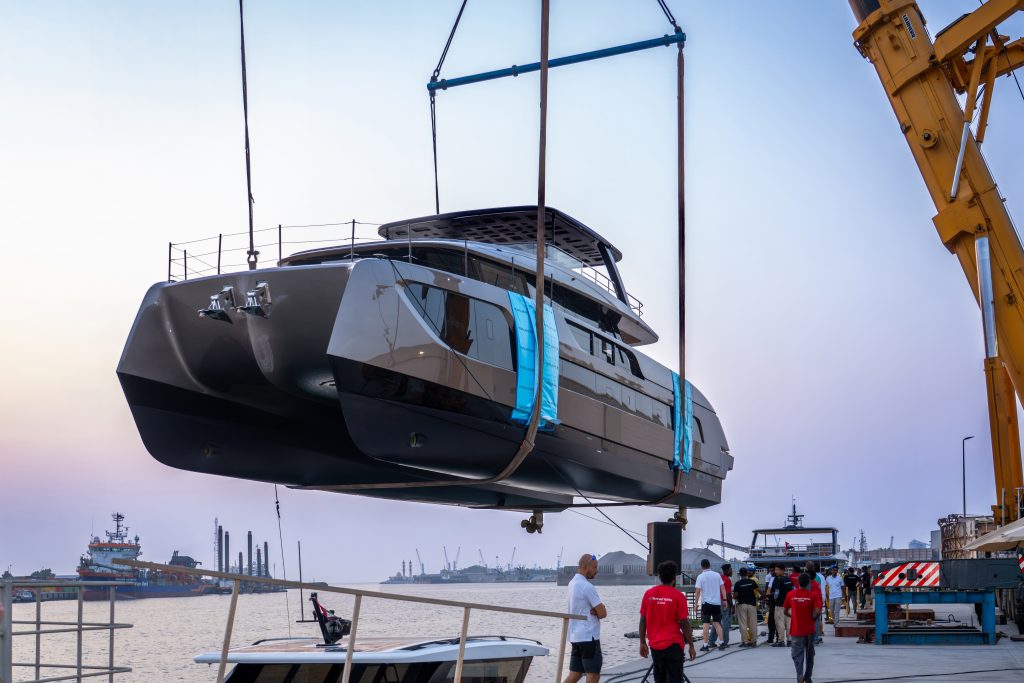
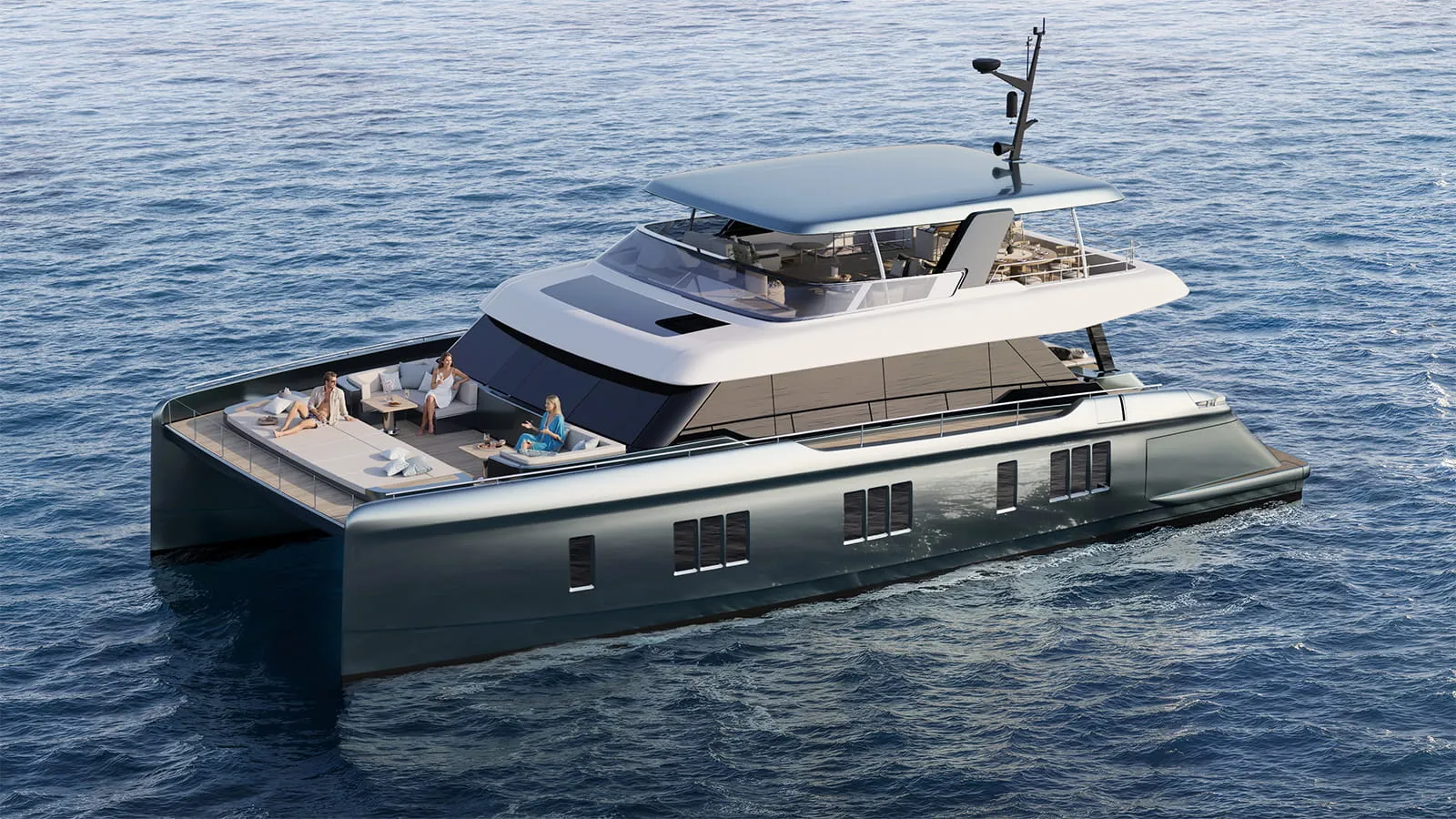
In 2023, the multi-award-winning multihull shipyard, Sunreef Yachts unveiled its groundbreaking range of hybrid yachts, the Sunreef ULTIMA. Designed to merge cutting-edge innovation with eco-conscious performance, these hybrid ecospeeders feature the industry’s lightest custom-engineered marine batteries, an in-house developed solar power system, and advanced hybrid propulsion, marking a new era for hybrid yachts in the luxury segment.
Since its debut, the ULTIMA line of hybrid yachts has rapidly expanded in size and scope. Sunreef Yachts now offers models ranging from 44 and 55 to 66, 77, and 88 feet, with the flagship Ultima 111 currently under development. While these hybrid yachts are built on a streamlined production platform, they still offer owners a degree of personalization, particularly in interior decor and equipment selection. This approach allows Sunreef to deliver hybrid yachts that maintain consistent performance standards while still catering to the lifestyle preferences of modern yacht owners.
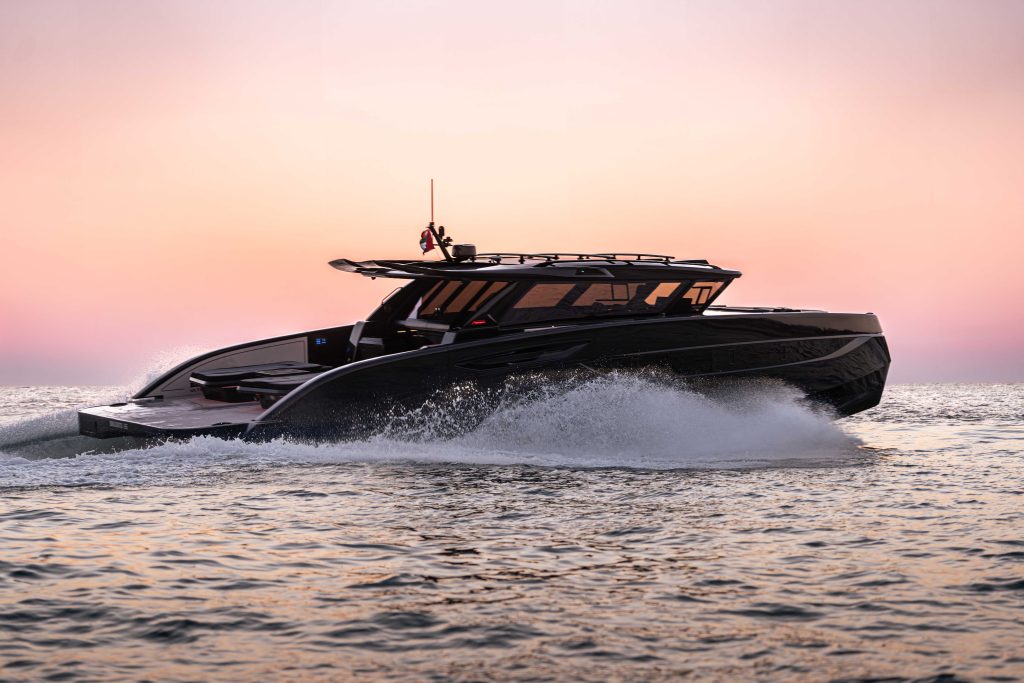
Among the standout models in the ULTIMA range is the Sunreef 55 ULTIMA, a fully constructed hybrid yacht that exemplifies Sunreef’s vision for fast, energy-efficient cruising. These hybrid yachts are engineered to deliver an ideal balance of luxury, stability, and impressive speed. In recognition of this innovation, the Sunreef 55 ULTIMA received the BLT Design Award 2024 for excellence in sustainable yacht design.
The Sunreef ULTIMA lineup is available in two propulsion variants: either twin thermic engines of 600 or 800 horsepower for maximum performance, or a hybrid diesel-electric system supported by rooftop solar panels and an integrated battery bank. With top speeds ranging from 40 to 45 knots, the Sunreef ULTIMA stands among the fastest hybrid yachts on the market, offering a thrilling yet sustainable alternative to conventional monohulls.
More than just a technological breakthrough, the Sunreef ULTIMA represents a smart investment in the future of yachting. With environmental regulations becoming more stringent and awareness around sustainability growing, the demand for high-performance hybrid yachts is on the rise. Offering lower emissions, reduced operating costs, and lasting value, the Sunreef ULTIMA line is well-positioned to lead this transformative shift in the global yachting landscape.
Frequently Asked Questions
Are there hybrid yachts?
Offering the best of both worlds, Sunreef Yachts combines the efficiency and power of traditional internal engines with the eco-conscious aspect of electric motors (supported by advanced lithium-ion batteries) in hybrid yachts. Sunreef Yachts has recently launched a new range of hybrid eco-speeders called the Sunreef ULTIMA in sizes ranging from 44, 55, 66, 77, to 88 feet. Submerge in a superior yachting experience that is eco-friendly and luxurious.
What makes a yacht hybrid?
Hybrid yachts combine two or more modes of energy to reduce non-renewable energy consumption and help preserve the environment by lowering carbon emissions.
What is the largest hybrid yacht?
Hybrid yachts offer a practical cruising solution for eco-conscious adventure seekers aiming for transoceanic crossings. To date, the largest hybrid yacht produced by Sunreef Yachts is the 80 Sunreef Eco that, like all Sunreef’s yachts, switches effortlessly between diesel and electric propulsion, ensuring optimal performance and fuel efficiency.
What is the range of a hybrid yacht?
Today, hybrid yachts are at the forefront of yachting as they combine the benefits of diesel engines and electric motors to offer unlimited range over different cruising modes. A fully charged battery pack can provide a range of 20 nautical miles at four to six knots on the electric mode. However, it is true that the yacht’s range may be subject to change depending on the speed and weather conditions.
How do hybrid yachts work?
Simply put, a hybrid yacht works by managing its resources. These are designed to optimize energy consumption, which results in substantial fuel savings. Hybrid yachts are not only compatible with generators, but also solar panels, invertors, and alternators which adds to the functionality.