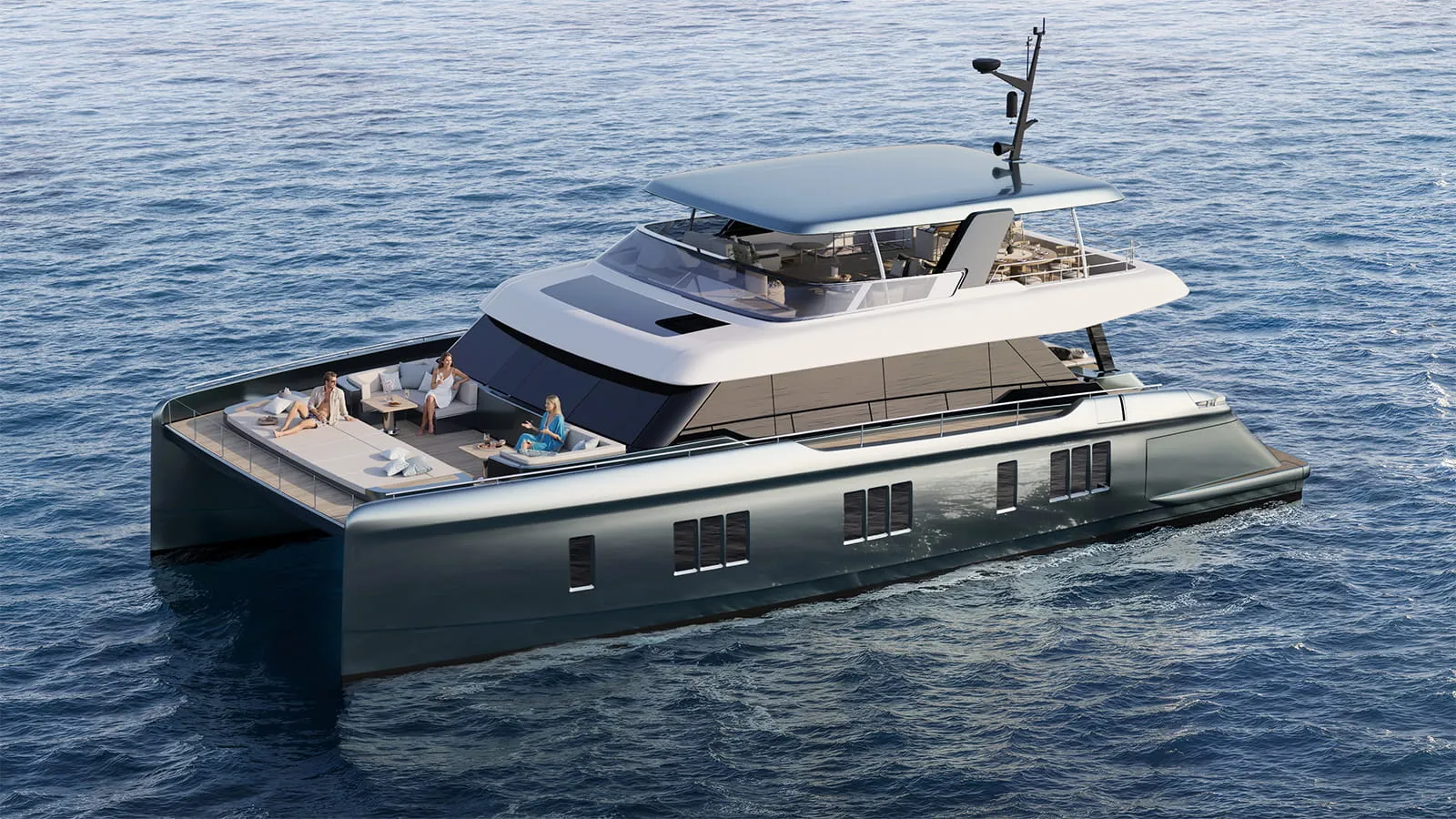
When it comes to choosing the perfect yacht, the catamaran vs monohull decision shapes every aspect of your experience at sea. From stability and safety to comfort and cruising efficiency, each hull type offers a distinct approach to life on the water. As modern yacht buyers seek more space, cleaner propulsion, and smoother voyages, understanding these differences has never been more important. In this guide, we compare the real-world performance of catamarans and monohulls to help you decide which vessel truly delivers for your lifestyle and ambitions.
Catamaran vs Monohull Stability
When evaluating stability in the catamaran vs monohull debate, catamarans offer a major advantage, thanks to their dual-hull structure. The absence of heel makes for a smooth, level ride, significantly reducing seasickness and fatigue. This inherent stability also makes sailing easier and safer, especially for families with children on board. Catamarans provide better access to the water and typically feature wide, open decks that enhance comfort and movement during cruising.

Safe by Design
Catamarans are built with redundancy in mind, with many systems duplicated to ensure maximum reliability during offshore passages. Monohulls, by contrast, are more vulnerable due to their single-hull construction and often require stabilizers to counteract rolling motion. They also pose a higher risk of single point failure and tend to be less family-friendly due to steeper angles, tighter spaces, and more demanding handling. When it comes to safety, the catamaran vs monohull comparison clearly favors the twin-hull designs.

Draft, Drag, and Catamarans vs Monohulls in Rough Seas
In the catamaran vs monohull comparison, catamarans stand out for their shallow draft, which allows them to access anchorages and lagoons that monohulls often can’t reach. Their reduced hull surface in contact with the water also means less drag, resulting in greater fuel efficiency. Catamarans provide more room for renewable energy solutions like solar panels and wind generators, making them an ideal platform for eco-conscious cruising. Their wide beam also accommodates electric propulsion systems more effectively, offering a quieter and cleaner onboard experience.
When it comes to draft and propulsion, catamarans benefit from a shallower draft and reduced drag, allowing for better fuel efficiency and access to remote anchorages. Monohulls, with their deeper drafts and single-hull resistance, often struggle in such conditions and consume more fuel. They also offer limited space for alternative propulsion systems and renewable energy solutions. These performance and design constraints become especially important in the broader catamaran vs monohull conversation, where sustainability and range are growing priorities.

Handling, Maneuverability, and Control
Catamarans offer remarkable maneuverability at low speeds, largely due to their twin engines and wide beam. This configuration allows for tight turns, easy pivoting, and smoother docking even in busy marinas. These advantages are especially valuable for less experienced owners or short-handed crews. In the catamaran vs monohull decision, this kind of responsiveness can make all the difference in everyday cruising scenarios.
While monohulls are often praised for their feedback under sail, they tend to be more challenging in confined spaces. Their single engine and deeper keel limit maneuvering options, especially when reversing or handling in strong winds. The catamaran vs monohull handling contrast becomes even more apparent when docking in tight quarters, where catamarans offer more control and predictability. Whether you’re a new owner or a seasoned cruiser looking for simplicity without sacrificing performance, catamarans deliver a more forgiving and accessible handling experience.

Space to Live, Room to Breathe
When it comes to onboard comfort, the catamaran vs monohull comparison shows catamarans as the more spacious and adaptable choice. Thanks to their wider beam, catamarans can offer up to twice the living space of a monohull of the same length. This allows for open-plan salons, 360-degree views from the main deck, and large outdoor areas like aft cockpits, flybridges, and foredecks. Catamarans also provide more privacy, with cabins spread across two hulls and more flexible layout options. Whether at anchor or underway, the stable platform of a catamaran makes for a smoother, more relaxing experience.
In contrast, monohulls typically have narrower interiors and limited open living spaces. The catamaran vs monohull debate often highlights how monohull cabins are closer together, which reduces privacy and layout flexibility. Their higher tendency to roll and increased beam-to-beam motion can also make time onboard less comfortable, especially in rougher conditions. Outdoor areas are generally smaller and less usable, making catamarans a clear winner for those prioritizing comfort, space, and a more luxurious onboard lifestyle.

Catamaran vs Monohull Boats Prices
When evaluating the cost of ownership in the catamaran vs monohull comparison, it’s important to look beyond the initial purchase price. Catamarans typically come at a higher upfront cost, largely due to their dual-hull construction and increased volume. They also require more dock space, which can translate to higher marina fees depending on the location.
However, the long-term financial outlook often shifts the catamaran vs monohull equation in favor of catamarans. Their shallow draft and efficient twin-hull design reduce drag, which leads to significantly lower fuel consumption over time. Additionally, catamarans offer more deck space for solar panels and sustainable power systems, helping cut down on running costs and reliance on diesel.
Maintenance costs are another consideration in the catamaran vs monohull decision. While catamarans have more systems (two engines, two rudders), they also experience less wear and tear from heeling and wave impact. More importantly, catamarans tend to hold their value better in the resale market, particularly with the rising demand for luxury multihulls. Overall, for buyers focused on operational efficiency and long-term value, catamarans represent a smart investment.

Unpack The On-Water Experience
The catamaran vs monohull comparison reveals two very different approaches to life at sea. Catamarans deliver unmatched stability, generous living spaces, and impressive fuel efficiency, which makes them the top choice for comfortable cruising, family voyages, and eco-minded travel. Monohulls still attract sailors who value a traditional feel and the tighter handling of a single-hulled yacht, yet they cannot match the sheer comfort and versatility that twin hulls provide.
This is where Sunreef Yachts truly shines! As a world leader in luxury catamarans, Sunreef demonstrates how modern design, and advanced engineering can elevate every advantage identified in the catamaran vs monohull discussion. From exceptionally wide beams that create penthouse-style interiors to innovative solar-electric solutions that lower environmental impact, each Sunreef build proves why a catamaran is often the better choice for discerning owners. If you are ready to experience superior stability, space, and sustainability at sea, explore the latest Sunreef Yachts collection and see how a catamaran can redefine your expectations of yachting.
Frequently Asked Questions
Can catamarans handle rough seas?
Yes, catamarans handle rough seas exceptionally well. In the catamaran vs monohull comparison, Sunreef’s wide-beam designs ensure a stable, level ride even in challenging conditions.
What is the advantage of a multihull boat?
Multihulls offer more space, better stability, and improved fuel efficiency. Sunreef Yachts maximizes these advantages through expert craftsmanship in both power and sailing catamarans.
Which is safer, a catamaran or a monohull?
Catamarans are generally safer for family cruising. Sunreef catamarans feature twin-hull redundancy and advanced safety systems, making them a reliable choice.
Do catamarans flip easily?
No, modern catamarans like those from Sunreef Yachts are built for extreme stability. Their smart engineering makes flipping extremely unlikely, especially compared to monohulls.